
How to taste premium water: enhance your hydration
Many people invest in high-quality mineral water yet drink it straight from a cold bottle without a second thought. That means missing the full sensory experience the water was sourced to deliver. Water tasting follows a structured sensory evaluation similar to wine tasting, involving five key steps. This guide walks you through each one, from choosing the right glass to interpreting mineral notes, so you can genuinely appreciate what premium water offers. Whether you are new to fine water or already curious about the differences between brands, these techniques will sharpen your palate and raise your enjoyment.
Table of Contents
- Choosing your premium water and getting the setup right
- Step-by-step guide to tasting premium water
- Understanding water mineral content and taste influence
- Common mistakes and tips for elevating your tasting experience
- A fresh perspective: What most people miss when tasting premium water
- Explore premium water options for your tasting journey
- Frequently asked questions
Key Takeaways
| Point | Details |
|---|---|
| Structured tasting steps | Approach premium water tasting like wine—use visual, aroma, taste, mouthfeel, and finish stages. |
| Minerals shape taste | Mineral content and packaging dictate how water feels and tastes on your palate. |
| Glassware and temperature matter | Use proper glassware and taste water at room temperature for full flavour. |
| Avoid common errors | Skip plastic, cleanse your palate, and try blind tastings for genuine appreciation. |
| UK brands to try | Harrogate, Buxton, Fonteviva, and Evian offer distinctive premium water experiences. |
Choosing your premium water and getting the setup right
With expectations set, let’s start by choosing your premium water and preparing the right setup. The water you select matters, and so does how you present it.
The UK market offers several well-regarded premium options. Harrogate and Buxton represent strong domestic choices, while Fonteviva brings Tuscan mineral heritage to British tables. Evian remains a widely recognised international option. For a useful overview of how these brands compare on flavour and quality, this mineral water tasting guide from The Telegraph is worth reading before you begin.
Glassware makes a measurable difference. A white wine glass or tulip-shaped glass concentrates aromas at the rim, which a standard tumbler cannot do. The shape directs the water to specific areas of the palate as you sip, giving you more to work with. If you are tasting Fonteviva’s 750ml glass water collection, pour directly into a clean wine glass rather than drinking from the bottle.
Optimal tasting conditions include clear wine glasses, room temperature, a neutral palate, and tasting from low to high mineralisation. That last point is important. Starting with a high-mineral water will overwhelm your palate and make lighter waters seem flavourless by comparison.
Here is a quick comparison of setup options:
| Factor | Recommended | Avoid |
|---|---|---|
| Glassware | White wine or tulip glass | Plastic cups, mugs |
| Temperature | Room temp or 10-13°C | Ice cold or warm |
| Palate prep | Plain cracker or water rinse | Coffee, juice, strong food |
| Tasting order | Low to high mineralisation | Random or high-first |
| Environment | Neutral, odour-free room | Kitchen with cooking smells |
Before you begin, cleanse your palate with a plain cracker or a small sip of neutral still water. Avoid tasting after coffee, citrus juice, or spiced food, as residual flavours will distort your perception. A quiet, neutral-smelling environment also helps.
Key preparation steps:
- Select two to four waters with varying mineral profiles
- Chill to 10-13°C or allow to reach room temperature
- Pour 100-150ml into each glass
- Label glasses if conducting a blind tasting
- Arrange from lowest to highest TDS (Total Dissolved Solids)
Pro Tip: Taste at least two waters side by side. Contrast is the fastest way to train your palate to detect mineralisation differences.
Step-by-step guide to tasting premium water
Once your water and environment are ready, it’s time to taste using professional techniques. The process mirrors wine evaluation but is more accessible.
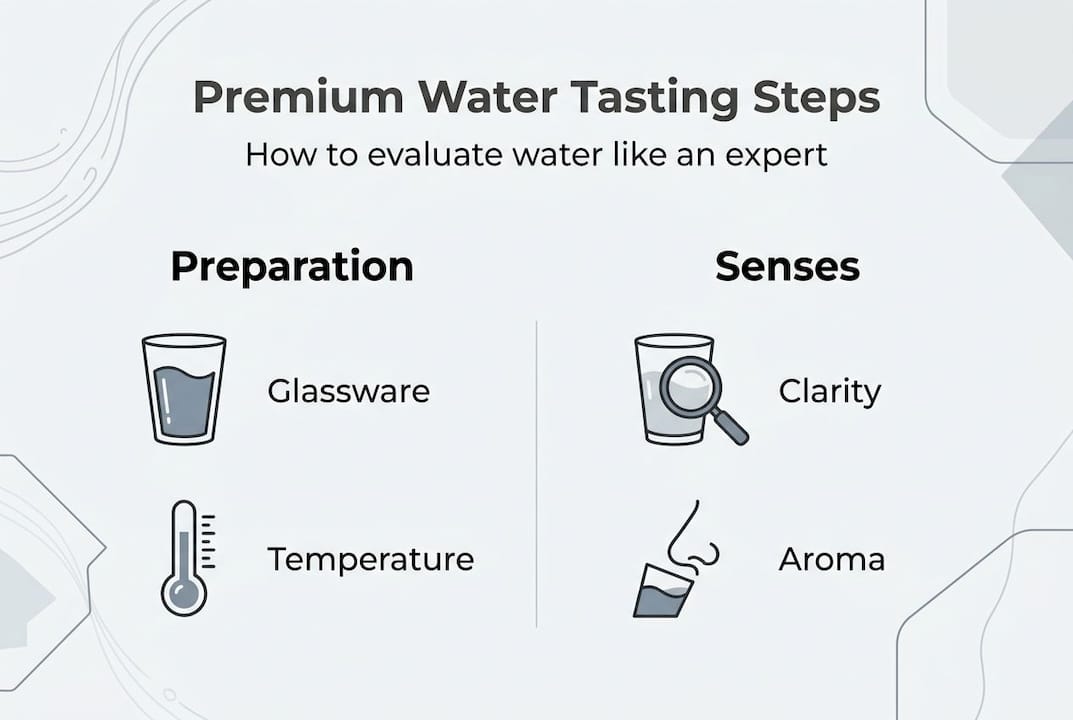
Water tasting involves five structured sensory steps: visual inspection, aroma, taste, mouthfeel, and finish. Each stage reveals something the previous one cannot. Skipping steps means missing information that defines a water’s character. Water sommeliers use this exact framework to evaluate entries at international competitions.
The five tasting steps:
- Observe. Hold the glass up to natural light. Premium still water should be completely clear with no cloudiness. Sparkling water should show fine, persistent bubbles rather than large, fast-rising ones. Fonteviva’s sparkling 1L PET case is a good reference for consistent carbonation quality.
- Sniff. Bring the glass close to your nose without touching it. Inhale gently. Premium water should be neutral to very subtly mineral. Any chemical or plastic note signals poor quality or packaging issues.
- Sip and swirl. Take a small sip and move the water around your mouth before swallowing. This distributes it across all taste zones and releases any dissolved minerals.
- Assess mouthfeel. Notice weight and texture. Is it light and crisp, or does it feel fuller and rounder? High-calcium waters often feel smoother, while high-magnesium waters can feel slightly heavier.
- Evaluate the finish. After swallowing, pay attention to what lingers. A clean finish suggests low mineralisation. A longer, earthy or slightly salty aftertaste points to higher mineral content.
| Tasting step | What to observe |
|---|---|
| Visual | Clarity, bubble size and persistence |
| Aroma | Neutral, mineral, or off-notes |
| Taste | Sweet, salty, bitter, crisp |
| Mouthfeel | Light, silky, full, heavy |
| Finish | Short and clean, or long and mineral |
Pro Tip: Slurping slightly as you sip draws air into your mouth alongside the water, which intensifies your perception of subtle aromas and mineral notes.
Understanding water mineral content and taste influence
Having tasted the water, it’s important to interpret what those flavours and sensations mean. Minerals are the primary driver of taste variation between waters.
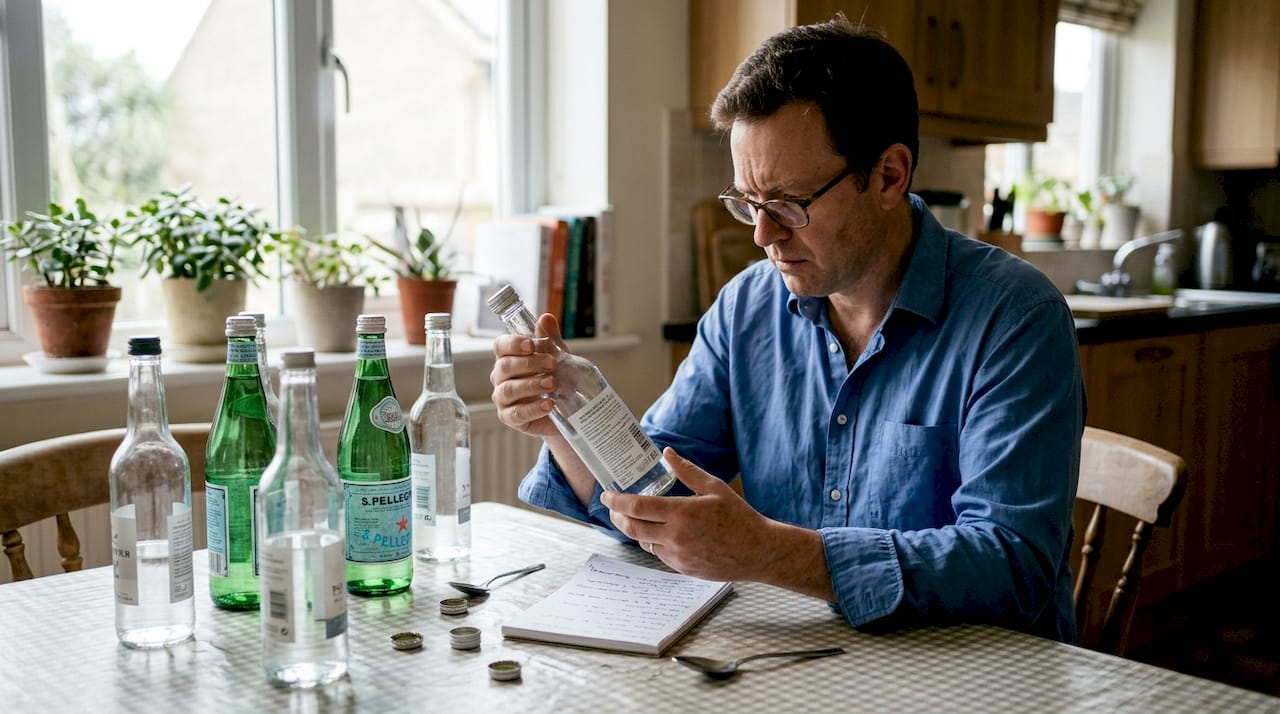
TDS stands for Total Dissolved Solids, a measure of the combined mineral content per litre. TDS benchmarks show that low TDS waters taste crisp, medium TDS waters feel silky, and high TDS waters are bold and mineral-rich. Premium waters typically sit between 200 and 500 mg/L.
Voss, sourced from Norway, sits at an ultra-low TDS, making it exceptionally neutral. San Pellegrino is high TDS, delivering a bold, complex profile. Harrogate has a notably silky mouthfeel, while Buxton is regarded as a well-balanced premium option. Fonteviva’s gold still water 750ml, naturally filtered through Apuan Alps marble, reflects a balanced mid-range mineral profile suited to food pairing.
Each mineral plays a distinct role in shaping the water’s character:
- Calcium: Contributes a smooth, sometimes slightly chalky sensation
- Magnesium: Adds a gentle bitterness or sweetness depending on concentration
- Sodium: Creates a subtle salty note, more apparent at higher levels
- Bicarbonates: Deliver earthy undertones and influence how round the water feels
Food pairing follows logically from this. Low-TDS waters work well alongside delicate dishes such as white fish, sushi, or light salads, where a bold water would overpower the food. High-TDS waters pair better with rich, flavourful dishes like aged cheese, red meat, or robust pasta.
“Understanding the mineral profile of your water is the first step to pairing it intelligently with food.” Water sommelier advice
Pro Tip: Check the label for the full mineral breakdown before tasting. It gives you a reference point to compare what you read against what you actually perceive.
Common mistakes and tips for elevating your tasting experience
Now that you know what to expect from premium water, let’s cover how to avoid common pitfalls and maximise your tasting experience.
The most frequent error is tasting water too cold. Ice-cold water suppresses flavour and mouthfeel, making it almost impossible to detect mineral nuance. Similarly, tasting from plastic cups introduces off-flavours that distort your perception. Glass packaging preserves taste better than plastic, and the same logic applies to the vessel you use for tasting.
Another common mistake is assuming price reflects quality. Some mid-priced waters outperform expensive brands in blind tastings. Experts confirm that differences between waters are real and traceable to minerals and terroir, but those differences do not always align with price. Comparative and blind tastings at home are the most reliable way to form your own view.
Four common tasting mistakes to avoid:
- Tasting water straight from the fridge without allowing it to warm slightly
- Using plastic cups or drinking from the bottle during evaluation
- Skipping palate cleansing between different waters
- Judging a water solely by its price or brand reputation
“Scepticism about water differences is common, but mineral content and source genuinely shape what you taste. Blind tastings reveal this clearly.” Bottled water differences
For sparkling water tasting, Fonteviva’s silver sparkling water 330ml in glass offers a clean, consistent carbonation that makes it easy to focus on mineral character without packaging interference.
Pro Tip: Organise a blind tasting with two or three waters poured by someone else. Without labels, you rely purely on sensory data, which builds genuine appreciation faster than any labelled comparison.
A fresh perspective: What most people miss when tasting premium water
Most guides focus on technique, but the bigger shift is perceptual. The assumption that all water tastes the same is widespread, and it is what holds most people back from genuine appreciation. The real difference between waters lies in mineralisation and packaging, not marketing.
The UK is seeing a clear shift. Premium water is rising in fine dining, driven by alcohol moderation trends and growing interest in wellness. Water menus are appearing in restaurants that previously offered only one still and one sparkling option. Glass bottles are central to this, both for taste preservation and for the signal they send about quality.
Fonteviva’s 1L sparkling glass pack sits comfortably within this trend, offering a format suited to both the dining table and the home tasting session. Blind tastings remain the most effective way to break price bias and develop a palate that responds to what is actually in the glass, not what is on the label.
Explore premium water options for your tasting journey
Ready to put these techniques into practice? Fonteviva offers a range of premium Italian mineral waters sourced from the springs of Tuscany, naturally filtered through Apuan Alps marble, and available in both still and sparkling varieties across glass and PET formats.
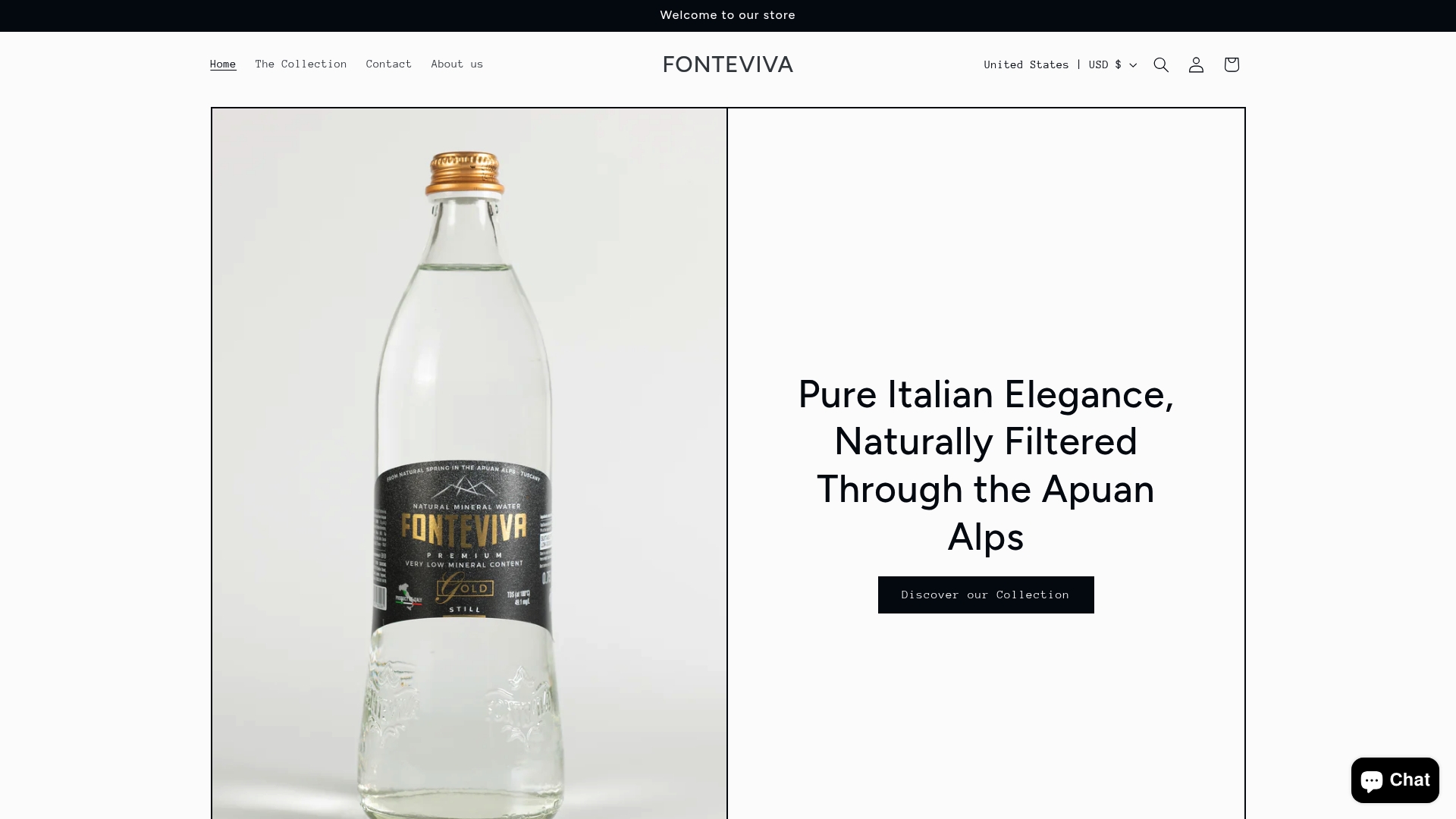
For a refined still option, the Fonteviva gold still water 330ml in glass is ideal for your next tasting session. If sparkling is your preference, the Fonteviva silver sparkling water 750ml delivers consistent carbonation and clean mineral character. Explore the full range at Fonteviva and apply everything covered in this guide to experience the difference that genuine mineral heritage makes.
Frequently asked questions
What is the ideal temperature for tasting premium mineral water?
Room temperature or 10-13°C allows flavours and aromas to develop fully. Serving water too cold suppresses mineral character and makes differences between waters harder to detect.
Do premium waters really taste different from cheap bottled water?
Yes. Mineral content, source, and packaging all influence flavour, mouthfeel, and aftertaste. Blind tastings are the most reliable way to confirm these differences for yourself.
Which minerals impact premium water taste most?
Calcium imparts a smooth profile, magnesium adds bitterness or sweetness, sodium creates saltiness, and bicarbonates deliver earthy notes. The balance of these minerals defines a water’s overall character.
Should I use glass or plastic bottles for tasting premium water?
Glass bottles best preserve taste and purity. Plastic can introduce subtle off-flavours that distort your evaluation, particularly in warmer conditions.
What are the best UK premium water brands for tasting?
Harrogate, Buxton, Fonteviva, and Evian are well regarded for their balanced mineral profiles and consistent flavour. Each offers a distinct mineralisation level, making them useful for comparative tasting sessions.
Recommended
- Fonteviva 1.5L PET Still Water - 6 Pack – FONTEVIVA
- Fonteviva Still & Sparkling Natural Mineral Water – 750 ml Glass (Case – FONTEVIVA
- Fonteviva Sparkling Water 1L PET Case of 12 - Premium Marble-Filtered Water – FONTEVIVA
- Fonteviva Gold Still Water 750ml Glass | Premium Italian Natural Mineral Water – FONTEVIVA